
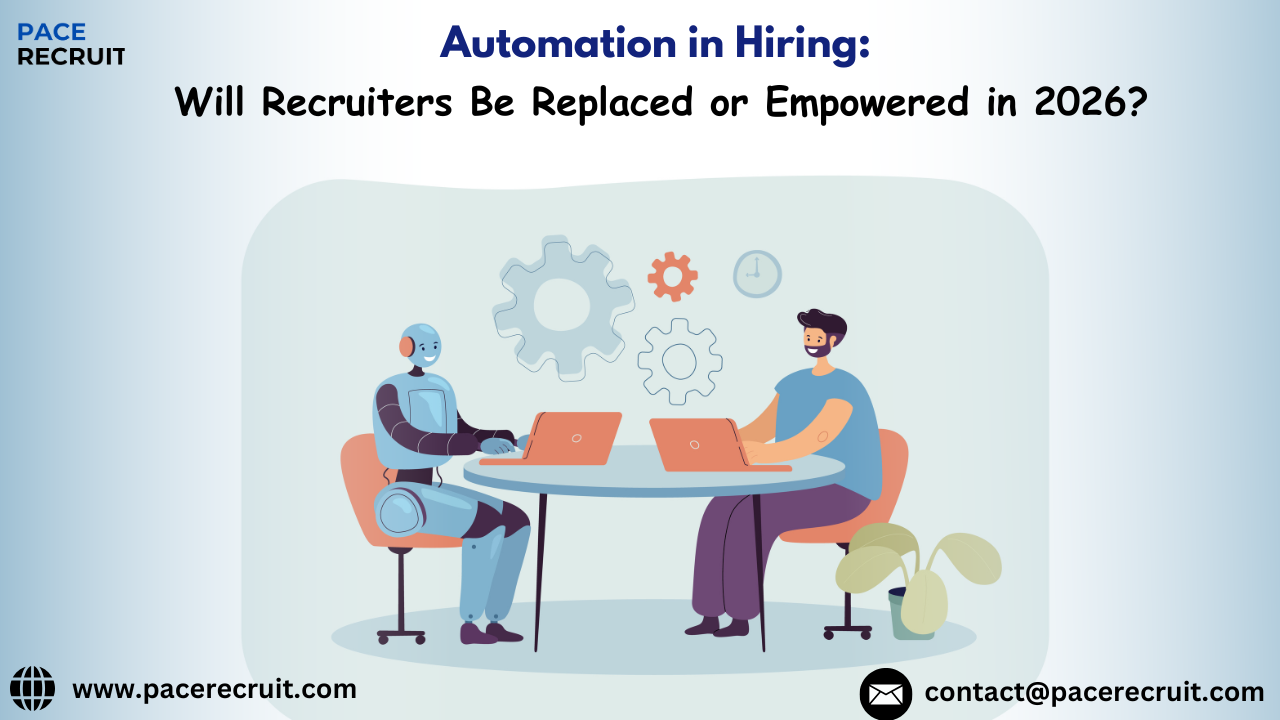
Introduction: The Automation Debate Reshaping Recruitment in 2026
Recruitment automation has come a way. It is not about looking at resumes or matching keywords anymore. Now that we are, in 2026 recruitment automation uses intelligence and machine learning. It also uses analytics and intelligent workflow systems. These systems affect every part of the hiring process. Recruitment automation is used for finding candidates screening them interviewing them and even when they start working. It is also used for planning the workforce. Automation is a part of hiring now. Recruitment automation is the base of the hiring process.
Table of Contents
The recruitment industry is changing fast and this is making people ask a very important question: Will computers and machines replace recruiters or will they actually help recruiters do their job better? Companies are worried that they will lose the connection with people job seekers are scared that they will not be chosen because of computer programs and recruiters are wondering what their jobs will be, like when machines are doing a lot of the work. Recruiters are thinking about how recruitment will change when machines are used more.
The truth is that things are not simple. Automation is not taking the place of recruiters. What it is doing is changing the way we do recruitment. By the year 2026 recruiters who are good at working with technology will be the ones who’re successful. This blog is about how automation’s changing the way we hire people. It is also about how people with skills and experience’re still very important in recruitment. We will look at how recruiters can make sure they have a job, in the future when automation is being used more and more in hiring. Recruitment is. Recruiters need to change with it. Automation is changing recruitment not replacing recruiters.
What does automation in hiring really mean in 2026. Automation in hiring is a thing these days. It is changing the way companies find employees. Automation in hiring means using machines and computers to do tasks that people used to do. This can include looking at resumes and covering letters. Automation in hiring can also mean using programs to talk to people who want to work for the company.
The goal of automation in hiring is to make the process faster and more efficient. Automation in hiring can help companies find the person for the job. It can also help people who want to work for the company by making it easier for them to apply.
Understanding Automation in Hiring: What It Really Means in 2026
It is also about making sure that the process is fair and does not discriminate against anyone. Automation in hiring is something that companies are going to have to get used to in 2026. It is the future of hiring. It is here to stay. Automation, in hiring is going to change the way companies think about finding employees.
Automation in hiring is when we use technology to make the hiring process easier and better. This means we use machines to do a lot of the work. By the year 2026 automation in hiring is not about doing simple things. Automation in hiring is now a part of making important decisions looking at numbers and information and coming up with a plan to find the best people for the job. Automation, in hiring is really changing the way we do things.
Recruitment is really changing these days. Modern recruitment automation is about using new technology to make hiring easier. This includes things, like tracking systems that use artificial intelligence, which we will call AI-powered applicant tracking systems and chatbots that talk to people who want to work for the company in real time.
There are also tools that schedule interviews automatically analyze video interviews and test the skills of people who want to work for the company. Some tools can even predict who will be a hire. These recruitment automation systems can look at a lot of information quickly which is something that people cannot do. This helps companies hire people faster make choices and be more consistent when they are hiring new employees. Recruitment automation is really helpful because it uses AI- applicant tracking systems and other tools to make the hiring process better.
However, automation does not mean removing humans from hiring. Instead, it shifts recruiters away from repetitive administrative tasks and toward strategic, relationship-driven responsibilities. Automation handles the “how,” while recruiters focus on the “why” and “who.”
Why Automation in Hiring Is Accelerating Faster Than Ever
The use of automation in hiring is happening fast. This is because a lot of things are changing in the workforce at the time. In 2026 companies have to deal with not having enough talented people to hire. They also have to figure out how to make remote and hybrid work models work. On top of that companies everywhere are competing with each other to find the best people to hire.. They have to make sure they are treating everyone fairly and making their workplaces more diverse. Automation, in hiring is becoming more popular because of all these challenges. Companies are using automation in hiring to solve these problems.
Manual hiring processes are just not able to handle the number of applications that come in. The hiring team needs a way to do things. Automation is the answer. It helps recruiters deal with thousands of people who want to work at the company. Automation makes sure that every person who applies is treated fairly. The company can make decisions about who to hire faster. The recruiters do not have to worry about making mistakes because automation helps them follow the rules and be consistent. Automation helps recruiters with the hiring process for jobs, like these.
People looking for jobs have ideas about what they want now. They want to hear from companies quickly they want to know what is going on and they want to feel like they are dealing with real people. Machines can help with this. They can talk to job seekers away give them updates and stop them from feeling like they are sending their applications into a void. The old way was really frustrating for people looking for jobs they would apply and then nothing would happen it was like their application had disappeared. Now companies can use machines to make this process better for job seekers for example automated systems can send emails to let them know that their application has been received and that it is being looked at. This makes the experience of looking for a job a lot, for people and it makes companies look more caring and organized.
Key Recruitment Tasks Already Automated in 2026
Automation in hiring is now used for different things when it comes to finding new people to work at a company. A lot of the tasks that recruiters used to do are now done by machines. For example Automation in hiring is used to look at resumes. This is one of the things that Automation in hiring does best. It uses computer programs to look at the experience and skills that people have listed on their resumes and figure out if they are a good fit for the job. Automation, in hiring can do all of this in a few seconds.
Candidate sourcing has changed a lot. Now we have automation tools that look for people in databases, social media and groups of individuals to find those who are not actively looking for a job but would be a good fit for the open positions. The automation tools search for candidate sourcing matches in these places. Candidate sourcing is made easier with these tools. We also use chatbots to talk to candidates at first and they answer questions get information and even have conversations to see if the candidates are a good fit, for the job. The chatbots help with candidate sourcing by doing the conversations.
When we talk about interview scheduling interview scheduling is now done by machines. This means we can do follow-ups and make offer letters quickly. It takes time to hire someone and it is more efficient. We use tools to look at data and see how well we are hiring people. These data analytics tools can tell us if a candidate will be good, at the job. They give us information that helps recruiters make good decisions about interview scheduling and hiring.
Despite this extensive automation, none of these systems function independently. They require human oversight, contextual judgment, and ethical decision-making—areas where recruiters remain indispensable.
Will Recruiters Be Replaced by Automation? The Real Answer
The anxiety that automation might take over the jobs of recruiters is quite an understandable fear but, for the most part, it is a misconception. Automation replaces the tasks that are done, not the whole roles. Recruiters who depend on only manual processes are the ones who are vulnerable, while those who change their ways are turning into the most valuable ones.
Recruitment really is all about people, relationships and making the right decisions. Although automation is very good at handling data, it is quite a different story when the question is about empathy, cultural subtleties, and complex decision, making. In fact, hiring is a lot more than just matching the skills of a person to a job description, it involves understanding one’s motivations, potential, and probably the best long, term fit.
By 2026, it is the role of recruiters to act as a bridge between technologies and talents. They check on the automated suggestions, question biased results, and make sure that the hiring decisions are in line with the values and the objectives of the organization. Automation is there to help recruiters, not to replace them.
How Automation Is Empowering Recruiters Instead of Replacing Them
It automates hiring processes to empower recruiters in that they will be given time to participate in other important functions such as employer branding strategies, employee engagement strategies, workforce strategies, etc., rather than being bogged down in other menial chores such as interview schedules.
Recruiters are now provided with real-time data insights, thus helping them make more informed recruitment decisions. Additionally, predictive analytics enable them to recognize high-potential candidates and forecast recruitment needs. Automation results in greater conformity in recruitment processes, thus reducing unconscious biases.
Most importantly, automation increases recruiter impact: Higher recruiter pipelines can be handled as improved candidate engagement and experiences can be provided along with business results with recruiter activities not seen as supporting but as strategic activities.
The Human Skills Automation Cannot Replace in Recruitment
Human Skills like these are what make Recruitment so important. The Human Skills that Automation Cannot Replace in Recruitment are what make a difference.
For example Recruitment is not just about finding someone who has the skills and experience. Recruitment is also about finding someone who’s a good fit, for the company and the team. The Human Skills that Automation Cannot Replace in Recruitment are necessary to make this happen.
The Human Skills that Automation Cannot Replace in Recruitment are what make Recruitment a job that needs a touch.
People are still better at some things when it comes to finding employees. We need to be able to understand what makes a candidate tick deal with their worries and make them feel like they can trust us. Recruitment is about recruitment skills and recruitment skills are about people. You just cannot get a machine to be as empathetic as a being or make people feel like they are really talking to someone who cares about them. Recruitment skills, like these are what make a recruiter.
Recruiters are really good at negotiating with people. They have to talk about things like salary and job offers. They also have to manage what people expect from their job. This requires being able to adjust to situations and being able to persuade people. Recruiters also need to understand how people are feeling. Negotiation is another area where recruiters excel. These are skills that computers just do not have. Recruiters have to be good at negotiation because it is a part of their job. They have to negotiate salary discussions and offer negotiations and expectation management, for recruitment.
When we talk about fit assessment it is still something that people do. Computers can look at how people behave. They do not really get what a company is like how the team works together or how people interact with each other. Recruiters are important because they help figure out if a persons values match the company culture. They make sure the candidate and the company are a match. Cultural fit assessment is about finding the person, for the company and recruiters do this by looking at the candidates values and the company culture.
Finally, ethical judgment is essential. Recruiters must ensure fairness, inclusivity, and compliance while overseeing automated systems that may unintentionally reinforce bias if left unchecked.
Automation and Bias: What a Recruiter Will Be Responsible for in 2026
Automation of hiring has a major challenge in the form of algorithmic bias, which is one of the most critical issues. AI systems derive their learning from historical data which contains biases related to gender, age, ethnicity, or educational background.
Recruiters are the ones who can make a difference in 2026 by inspecting and correcting these bias patterns. They have to doubt the automated recommendations, thoroughly review the shortlists, and ensure the achievement of the diversity goals ethically. Automation is meant to increase fairness, not to decrease it.
Recruiters knowledgeable in the functioning of algorithms and their possible failure points are the ones who can be trusted with responsible hiring. Human intervention is the key to making automation a tool for inclusion rather than a means of exclusion.
How Candidates Experience Automation in Hiring
Automation is an asset to some but frustrating to others from a candidate’s perspective. If done right, it ensures faster responses, more clarity on communication, and more transparency in the procedure. Candidates love quick screenings, instant updates, and smooth applications.
But poorly designed automation feels impersonal or opaque. Without any human interaction, candidates may feel reduced to data points. In 2026, the best recruitment strategies balance automation with meaningful human touchpoints.
Recruiters must balance journeys of candidates with efficiency and empathy. Automation should be supported by communication, not substitution of relationships.
The Evolution of the Recruiter Role in 2026
The recruiter in 2026 does a lot more than just find people for jobs. The recruiter of 2026 is a person who helps with finding talent works with technology and thinks about business plans.
Recruiters of 2026 need to know about the tools used for hiring make sense of the information they get from data and make sure their recruitment plans fit with what the organization wants to achieve. Recruiters of 2026 have to be good at understanding hiring technologies and using data insights to make decisions, for the organization.
Learning things is very important for recruiters. They need to be good at using tools that have intelligence looking at analytics to understand information and working with automated systems. At the time recruiters must be able to get along well with people. This combination of skills is what makes a recruiter successful today. Recruiters with these skills are the ones who do well in their job. The role of recruiters is. They need to have this mix of skills to be good at what they do. Recruiters need to be comfortable, with technology and also be able to talk to people and understand their needs.
Those who embrace automation gain influence within organizations, positioning themselves as experts who drive hiring quality, efficiency, and long-term workforce success.
Automation in Hiring Across Different Industries
The degree of automation adoption may differ among various industries; however, its influence is universal. For example, in IT and tech recruitment, automation takes over the tasks of sourcing large numbers of candidates and screening them for the required skills. In healthcare automation also helps to verify credentials and is involved in hiring procedures that are typically very compliance, heavy.
Manufacturing and logistics have turned to automation for quick workforce ramp, ups whereas professional services deploy AI to evaluate candidates’ abilities and fit with the company culture. No matter the industry, recruiters find ways to use automation tools that cater to their unique requirements.
On the other hand, collaboration remains the major issue, technology is a tool that makes hiring more efficient, but human input is still indispensable for its proper implementation.
How Employers Can Implement Automation Without Losing the Human Touch
Automation strategies that work are those that focus on human needs. An excellent practice for an employer would be to use automation as a tool to assist rather than a substitute for human decision, making. Besides, it is of utmost importance to have clear communication, ethical principles, and proper training for recruiters.
Recruiters must be a visible part throughout the hiring process, which means interacting with candidates at critical touchpoints like interviews, feedback sessions, and offer discussions is the recruiter’s role. Maintaining this equilibrium not only earns candidate’s trust but also saves time.
Companies that have managed to combine the best of automation and human skills experience lower turnover of highly talented employees, less hiring, related stress, and a stronger employer brand.
PACE Recruit Collaboration: Empowering Hiring Through Smart Automation
At PACE Recruit, we believe that automation should not be about replacing the role of a recruiter but rather it should be about empowering the recruiter. Our formula is to combine both our deep human expertise and advanced hiring technologies, to provide smarter, faster, and more ethical recruitment solutions in 2026 and beyond.
Our collaboration model is a partnership where through us, the employers get strategic help in the use of automation while the recruiters get ensured that their role in decision, making is not taken away. PACE Recruit from AI, powered sourcing to human, enabled candidate engagement guarantees that technology becomes a tool that enhances the recruitment experience rather than a barrier one.
When an organization decides to work with PACE Recruit, they can expect to be equipped with innovative hiring solutions that are aligned with their insights, that focus on efficiency without losing the element of empathy, and that combine automation with the aspect of responsibility.
FAQs on Automation in Hiring:
1. What is automation in hiring and why is it important in 2026?
Automation in hiring is the use of artificial intelligence and technology to make the recruitment process faster and easier. In 2026, it will be necessary for such reasons as handling large talent pools, making things more efficient, and adapting to the expectations of modern candidates.
2. Will automation replace recruiters completely?
Not at all. Automation is a replacement for repetitive tasks, not for recruiters. The skills which include human judgment, empathy, and strategic decision, making are still very much needed in the hiring process.
3. How does automation benefit recruiters?
Automation rescues recruiters from the drudgery of manual tasks, it generates data, driven insights and it enhances their capacity for engaging more in relationship, building and strategic hiring.
4. Can automation help remove hiring bias?
When properly employed, technological tools also minimize biases, as illustrated in figure 2 below, while human intervention remains a key factor in this regard.
5. How can companies balance automation and human involvement?
Through the automation for efficiency while still keeping the recruiters involved.