
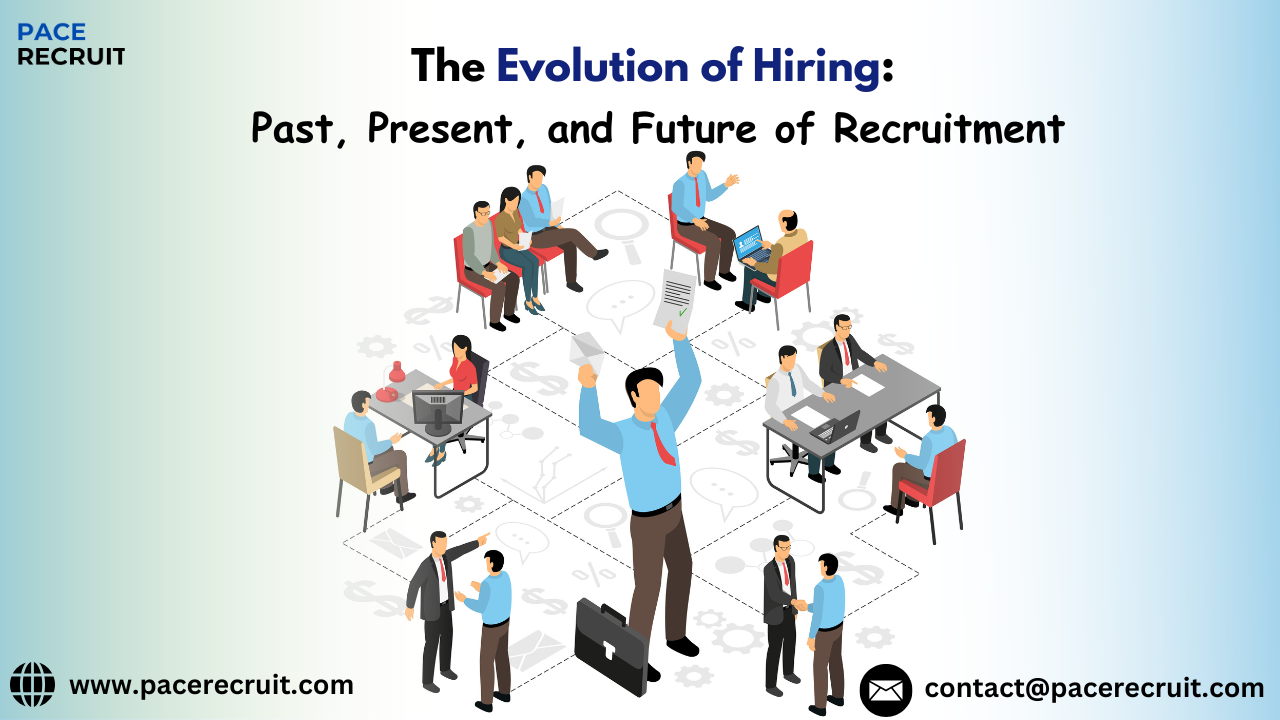
Introduction: Understanding How Hiring Has Transformed Over Time
Evolution of Hiring: The method of hiring has undergone transformations over the years, and recognizing these changes is very important for the success of a business. Recruitment, as an industry, has been constantly evolving due to various factors such as technological developments, changing economies, and changing employee expectations. Nowadays hiring procedures are very different from the traditional word-of-mouth methods to the present AI-assisted recruitment processes. By understanding how recruitment has evolved from the past to present and looking into how recruitment will evolve in the future — companies will be better prepared to compete for talent in our ultra-competitive workforce.
Table of Contents
Companies that learn these changes will position themselves with the best possible method to find, attract, engage, and keep some of the best employees available in any industry — because of the changes within our respective industries; it has never been more difficult or competitive to find top-tier talent compared to any other time in history. In the next section of this blog post, we will discuss how recruitment has changed from what it used to be like, up until now, as compared to how it may change in the future globally.
The Past: Traditional Hiring Methods and Their Limitations
Traditional Hiring Methods and Their Limitations Originally, recruitment was a simple but lengthy process. Employers depended mainly on the local community, ads in newspapers, and employee recommendations to find workers. Hiring was usually restricted by location, so firms had only a limited number of candidates to choose from. Recruiters had to physically sort resumes, invite people for interviews, and usually decide on the limited information available. Even though this method gave people a chance to meet the candidates in person, it was also prone to biases and inefficiencies.
Traditional hiring had a big disadvantage in that it was not scalable. When businesses expanded, it became quite difficult to handle recruitment manually. Moreover, there was hardly any attention given to employer branding or the candidate’s experience. Hiring was mostly on a reaction basis rather than a strategic one, as companies only filled positions when there were vacancies. Although traditional hiring had its flaws, it was the stepping stone for organized recruitment processes. It gave us the basic rules such as job descriptions, candidate assessment, and interview techniques, which are still useful today.
Digital Recruitment Revolution
In the late nineties and early two-thousands, the recruitment process underwent a seismic shift due to advancements in the usage of the internet. Companies were now able to connect with candidates through jobboards and/or online platforms, allowing them to be able to effectively recruit candidates from across the globe.
Through technology, the speed of hiring was dramatically improved and the potential to source from a larger population was created. Digital resumes replaced hard copy resumes, and email became the principal means of communicating with candidates. Recruitment agencies also started to utilise the databases available on line to source candidates more efficiently.
This phase of recruitment introduced some new challenges to the hiring community. With the dramatic increase in the number of applications, recruiters had difficulty reviewing applications and identifying the appropriate candidates for interviews. As such, it became evident that new methods were needed for filtering and screening candidates, which provides further opportunity for technology innovation in the recruitment space.
Currently available technologies that impact recruiting methods
Recruiting systems have changed dramatically over the last few years because of developments in technology.
Applicant Tracking Systems (ATS), Automation, and AI have become parts of many staffing firms’ recruiting processes.
Data Comparable to Before the Internet was Known to be a Good Way to Make Decisions
Recruiters are now using data to make better hiring decisions than they could with very little or no historical data from the candidates they were hiring. Standards like time-to-fill, candidate ratio, and cost to fill will assist organizations in becoming more streamlined when recruiting. A data-driven method provides more certainty so the overall efficiency of each company’s recruiting system will improve.
AI and Automation Support the Hiring Process
With the help of AI-based recruitment software, many of the manual tasks associated with candidate screening and matching will be automated. Recruiters will be able to concentrate their time on the strategic areas such as developing relationships with the prospects within a candidate pool, rather than completing administrative tasks.
Candidates want an Excellent Candidate Experience.
Today, Candidate Experience is an important way to differentiate a company’s recruitment process. Employers are investing in creating user-friendly career portals, providing personalized communication, and being transparent in their hiring processes to help them attract the best talent. A great Candidate Experience is equally important for improving hiring results and building an Employer Brand.
Remote Hiring and Worldwide Candidate Access
With so many companies turning to remote work, recruitment has become a global (borderless) process. Employers can now hire candidates from anywhere in the world, increasing candidate diversity and providing access to specialized skills. Virtual interviews, online assessments and digital onboarding are now operating procedures in most organizations.
The Role of Employer Branding in Modern Hiring
Employer Branding’s Importance in Contemporary Recruitment In fact, employer branding is becoming a very important part of recruitment nowadays. Candidates nowadays compare companies the way companies compare candidates.
They are after companies that share their values, present career advancement opportunities and give a good work atmosphere. Having an excellent employer brand is one of the main ways an organization can attract top-notch candidates and minimize recruitment expenses at the same time. Different companies use social networks, employee stories, and publishing marketing to highlight their work culture and values. Such go-getter recruitment attitude is expected to maintain a continuous supply of talents.
The Future: What Lies Ahead for Recruitment
What’s coming up next for recruitment? It’s going to be more technology driven and fast paced than ever before! There is an emergence of trends indicating that recruitment will become increasingly personalized, efficient and inclusive.
Personalizing Recruitment in the Future
The future of hiring will be about making sure every candidate has a personalized experience in the hiring process. Companies will utilize data to create meaningful interactions with candidates through customized messaging and job recommendations.
Increased Use of Artificial Intelligence in Recruitment
Organizations will continue to utilize AI as part of their recruiting strategy; however, the capabilities of AI will continue to grow. Organizations will use predictive analytics in conjunction with AI to identify candidates who are likely to succeed in certain jobs. AI will also help to minimize unconscious bias to provide more fair and inclusive workplace settings.
Hiring Based on Ability Instead of Degree
There is a move away from academic credentials towards hiring people based on what they can do. As such, employers are placing greater weight on applicants who have the skill sets needed for the job, regardless of their degrees. The result of this will be a much broader, more inclusive workforce.
Growth of the Gig Economy and Flexible Work
The gig economy will also continue to grow, with more people preferring to work as freelancers or contractors instead of being full-time employees. Employers will need to change their methods of recruiting new employees to support these types of new employees as well as develop ways to manage employees who will work from multiple locations (home vs. office).
Use of New Technology Systems
We can use newer technologies, like Virtual Reality (VR) or Augmented Reality (AR), in our recruiting process. For instance, candidates could tour our physical office virtually or complete a simulation of the position they are applying for before we actually hire them.
Recruiting Challenges Ahead
Although there are numerous possibilities for future hiring, many difficulties remain as well. The use of new data privacy laws and compliance, cyber security, and ethical guidelines for AI in recruitment will contribute to recruiting obstacles for organizations. Maintaining personal contact through the automating nature of recruitment will continue to be critical to your ability to succeed.
Finding a way to successfully integrate technology with human interaction will separate successful recruitment plans from unsuccessful. Companies able to develop this balance will be best positioned to acquire and keep top talent.
How Businesses Can Adapt to the Changing Hiring Landscape
How Businesses Can Change Their Hiring Practices to Keep Up with the TimesTo remain competitive, businesses need to be willing to change and regularly improve their hiring methods. This may mean getting new technology, training recruitment staff, and creating a more candidate-focused approach.
Along with that, it is very important that companies focus on diversity and inclusiveness in a way that their hiring is not only effective but done in a fair and impartial manner. Long-term success will also heavily depend on the countrys ability to develop close relationships with candidates and work on a positive employers image.
The PACE Recruit Cooperative: Your Ally in Contemporary Hiring
With a changing recruitment world, collaborating with suitable recruitment services can impact your results significantly. PACE Recruitment provides fully customized solutions that meet your specific business demands, as we acknowledge the many challenges involved with modern recruitment.
To facilitate your hiring process, we utilize both traditional and contemporary methods of recruiting (i.e. digital), while obtaining the most qualified employees available through advanced technologies, industry experience and data-based analyses.
Regardless of whether you wish to expand your staff, find highly skilled candidates or enhance the efficiency of your recruitment process, working collectively with PACE Recruitment will allow you to navigate the continually changing recruitment landscape and complete your company’s tasks with confidence.
FAQs on Evolution of Hiring:
1. What has been the biggest change in recruitment over time?
A major development is the transformation from the traditional, paper-based recruitment methods to highly technology-oriented recruitment with the implementation of AI, automatization, and data analysis.
2. In what ways has technology enhanced the hiring process?
Technology has significantly accelerated and streamlined recruitment. Besides that, it has enabled organizations to base their recruitment on objective data which allows for identification of the most suitable candidates and better decision-making.
3. What does recruitment look like in the future?
Recruitment will be very dependent on technology, with human resource source recruitment by AI, assessment of a candidate’s skills rather than education or experience, creation of a candidate who has had a personalized experience throughout his recruitment journey, and remote working.
4. What role does candidate experience play in recruitment?
Being mindful of a candidate’s experience results in better employer brand, draws-talented people and successful hiring.
5. What measures can hiring companies take to maintain their competitiveness?
To maintain competitiveness, companies should embrace recent technological advances, highlight employer brand and carry out candidate-centered hiring practices