
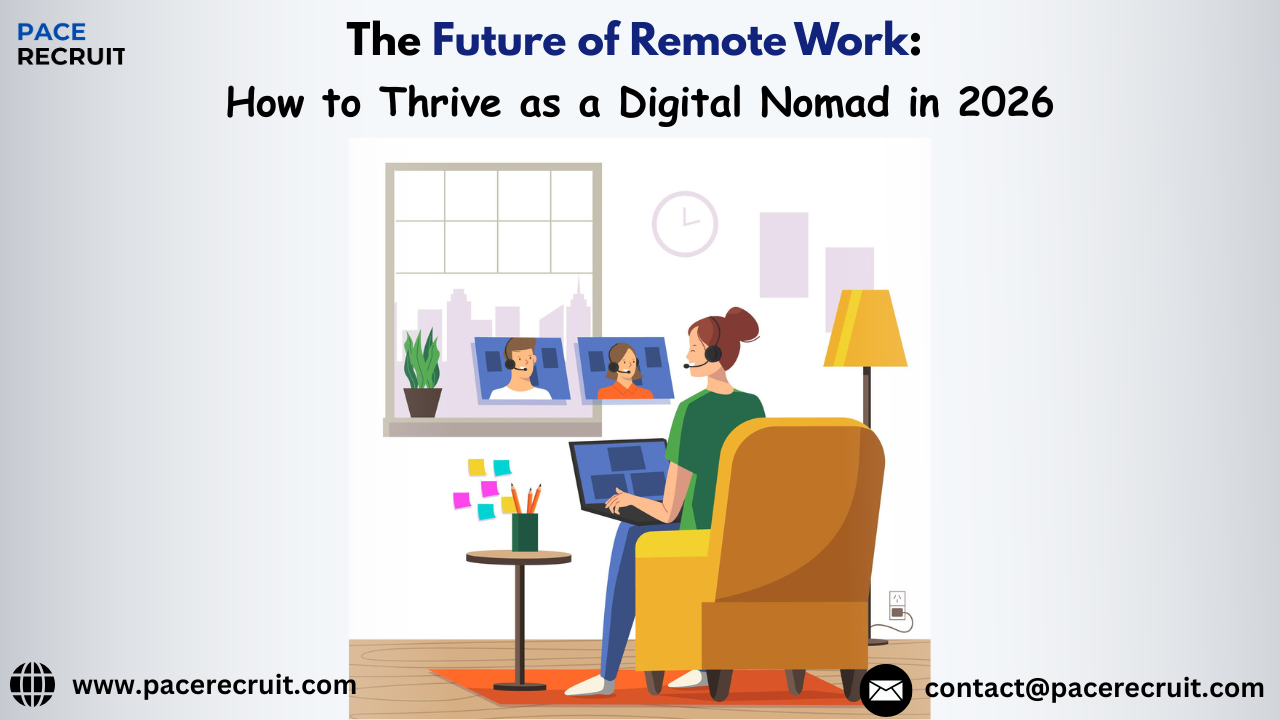
Remote work is no longer a trend that is slowly gaining popularity but rather the main way people all over the world work. The concept of work is pretty much changed by the time we are heading to 2026: work is no longer tied to offices, work hours are not as strict and activities are not limited by geography. To mention just a few, professionals, no matter their fields, are willing to work from wherever they want, and digital nomads becoming the new workforce paradigm is the most conspicuous outcome of this trend.
Table of Contents
What was initially a lifestyle choice for the likes of freelancers and tech workers only has now become a work model option for giant multinationals, startups, as well as government agencies. Digital nomads of 2026 differ from the typical WFH employees and daily commuters. They are career-wise free movers, able to tactically arrange their workgiving the attributes of work i.e. flexibility, productivity, and even quality of life among others.
This blog dives deep into the future of remote work and presents a thorough guide which sums up how pros can excel as digital nomads in 2026. It covers the topics like tech, skills, income strategies, legal framework, and productivity systems as well as long-term career viability.
Understanding the Evolution of Remote Work and the Rise of Digital Nomads
Remote work has evolved over time. After the period when it was only an emergency solution, the situation has turned around so that now companies and workers have found it to be a permanent and even preferred solution. Work-from-home is no longer an option granted by the company or a temporary benefit but rather an integral part of workforce strategies by 2026.
The digital nomads are the most evolved remote workers. Not only can they work from their homes but also from different cities, countries, and even continents while still being able to deliver the same amount of work as usual. Some of the major reasons behind this evolution are the internet, cloud computing, cybersecurity, and the transition to the asynchronous standalone working model.
The office-based work model is gradually losing its attractiveness among employers. Productivity is no longer measured through attendance but rather through output, accountability, and collaboration. This change has brought unlimited possibilities to workers that wish to advance their careers while traveling freely around the world.
Why the Digital Nomad Lifestyle Is Becoming the Preferred Career Path in 2026
Living as a digital nomad is still very much linked with traveling, however, the reasons behind the attraction to such a lifestyle have changed drastically. By the year 2026, well-being will outrank work as a priority and celebrities will work less but create better products. Stylish cafés and parks rather than office spaces will be places that attract creativity and productivity will flourish because of better mental health.
Economic factors also play a role. Professionals can optimize their earnings by working for internationally reputed firms while residing in areas that are affordable. This practice enables digital nomads to have extra money that can be used for saving, investing, and even achieving financial independence.
On top of that, generational changes have redefined the meaning of career success. The youth is more inclined to value benefits such as freedom, skill acquisition, and purpose rather than traditional ones like long working hours and hierarchical structures. Working remotely is the perfect solution to their problem as it will allow them to set a career which is in line with their personal goals and not with business limitations.
Essential Skills Digital Nomads Must Master to Thrive in the Future of Remote Work
Being a successful digital nomad in 2026 would mean having a perfect balance of technical-, interpersonal- as well as self-management skills. While the technical side is field-dependent, adaptability and willingness to learn constantly can be seen as all-rounders.
The ability to communicate digitally is a must. Remote team members have to be able to express their ideas in the most accurate manner using written and virtual means, they have to be efficient even if they collaborate across different time zones, and at the same time be able to handle intercultural business interactions. Strong documentation and active communication lead to fewer misunderstandings and higher productivity of the team.
The importance of self-discipline and time management skills cannot be overlooked. When there is no office to go to, digital nomads need to come up with their daily habits on their own, establish their own limits, and be able to keep up with their work at all times. Those who are good at focus and taking responsibility perform better than others in a remote environment.
Technology and Tools Powering the Future of Remote Work for Digital Nomads
Technology is the core of the digital nomad environment. Tools for working remotely will be smarter, more connected, and secure by 2026 than they have been before. Cloud-based solutions make it possible for teams to work together smoothly, share files in real-time, and automate processes even if the team members are geographically separated.
Artificial intelligence becomes more and more involved in productivity management, task prioritization, and workflow optimization. AI-powered assistants digital nomads help in schedule management, productivity analysis, and automating repetitive tasks thus allowing them to have more time for strategic work.
Security has also been a great concern. As workers are accessing company systems from different locations, secure networks, encrypted communications, and zero-trust security frameworks have become the norm. Digital nomads need to be up-to-date with security best practices so that they can safeguard both their own and the organization’s data.
How Digital Nomads Can Build Stable and Sustainable Income Streams in 2026
Income stability is one of the major issues that worry the minds of digital nomads aspirants. In 2026, digital nomads who are successful will have various different income streams instead of depending on only one. This way of doing things not only lowers the chance of money-related problems but also builds up the ability to withstand them in the long run.
A career plan can embrace the coexistence of remote full-time jobs, contract roles, consulting projects, and freelance gigs. There are many professionals who have a regular job done remotely and run some side projects like digital products, online courses, or content monetization.
Moreover, skill specialization is one of the ways to increase one’s earning potential. Digital nomads who make themselves known as experts in areas that have a high demand like AI, cybersecurity, data analytics, digital marketing or product management, can charge higher rates and, thus, enjoy stronger job security even in competitive global markets.
Legal, Tax, and Visa Considerations for Digital Nomads in the Future of Remote Work
With the rise of digital nomadism, governments are changing their regulations to be more friendly to location-independent professionals. In 2026, there will be a lot of countries that provide special visas for digital nomads which give them the right of residence while working for foreign employers.
However, tax compliance is still a hard nut to crack. Digital nomads need to be aware of rules related to residency, double taxation agreements, and income reporting requirements in different jurisdictions. To be on the safe side financially and legally, one should have a good plan and take advice from experts.
Also, employers are modifying their compliance frameworks to facilitate the needs of the teams that are geographically dispersed. Knowing contract terms, employment classification, and cross-border regulations will help digital nomads create honest and lasting professional relationships.
Maintaining Productivity, Mental Health, and Work-Life Integration as a Digital Nomad
Despite the perks that the digital nomad lifestyle has in store for you, it also comes with a set of challenges that are quite different from what one might encounter in a traditional lifestyle. Those who are isolated, overworked, and have a blurred line between their job and personal life could see their overall well-being getting worse if they do not take the right measures to address it.
Digital nomads who are able to make it work have certain common features such as them having a daily routine, a place to work, and their work hours which they stick to no matter where they are. In addition, they take care of their physical health, keep up with the exercise, and are active socially which all contribute to their getting into a state of balance.
Moreover, being mentally strong is of equal importance. Those who choose to spend their time on activities that improve their mindfulness, involve them in community activities and strengthen their personality development will have the necessary resources to face the unknown and keep their motivation high even when working remotely.
How Companies Are Adapting to the Future of Remote Work and Digital Nomad Talent
By changing talent acquisition strategies, companies are opening the doors to a global pool of skilled employees. In 2026, companies competing for talents offer more than just salary; they rather give priority to work-life balance, remote work-friendly policies, and career development opportunities.
Performance measures put more emphasis on results rather than time spent. To manage teams effectively, which are located in different places, you need to use trust-based management, asynchronous collaboration, and transparent goal-setting.
As firm’s move away from traditional office-based work, digital nomads get a chance to collaborate with such companies which leads to an enhanced career growth opportunity through increased professional exposure and without any relocation inconveniences.
The Role of Recruitment Partners in Supporting Digital Nomads and Remote Hiring
Recruitment partners who facilitate the coming of the work-from-home era play a vital role in linking talents with conducive channels. Targeted recruitment agencies are well-versed in worldwide hiring changes, remote job compliance necessities, and skill needs across various sectors.
They afford workers the platform in which they can smoothly transit into remote careers, comfortably negotiate contracts, and have their roles well aligned with the objectives of their long-term careers. On the part of companies, recruitment partners simplify the access to remote talents who have been vetted in advance and lessen the risks involved in the hiring process.
PACE Recruit Collaboration: Supporting the Future of Remote Work
PACE Recruit actively collaborates with professionals and companies who are dealing with changes brought by the future of remote work. Our strength is in connecting top talent who prefer remote work or are digital nomads with innovative companies that are looking for flexibility, good results, and diverse perspectives from a global point of view.
We help the professionals to find the jobs that are suitable for remote work, to create long-term remote careers, and to match their skills with the demands of the market which is constantly changing. We offer employers solutions in hiring strategically that makes it easy for them to get qualified talents without the limitation of a location. Thus, PACE Recruit is still an invaluable partner in designing the resilient, future-ready workforce as remote work keeps evolving.
FAQs on Future of Remote Work:
1. What will remote working look like in 2026?
Work-from-home in 2026 will be characterized by the liberty to choose, worldwide talent pool, productivity tools powered by AI, and staff evaluation based on results rather than presence in traditional offices.
2. What steps should professionals take to become digital nomads and be successful in 2026?
Success hinges on holding skills that are in demand, good communication, having a disciplined lifestyle, diversified income streams, and having a good grasp of legal and taxation matters.
3. What kinds of jobs offer the greatest opportunities to digital nomads?
The fields of Technology, digital marketing, data analytics, AI, cybersecurity, product management, and consulting will be the strongest remote opportunities providers.
4. Are digital nomad visas prevalent in 2026?
Sure, a lot of countries offer digital nomad visas that make it convenient for professionals to stay abroad while working remotely for global employers.
5. In what ways does PACE Recruit provide support to remote and digital nomad careers?
PACE Recruit is the link between professionals and remote-ready positions, giving career support and assisting companies to efficiently hire skilled remote workers.